American Heart Association projects nearly 20 million US adults will be living after a stroke in 2050

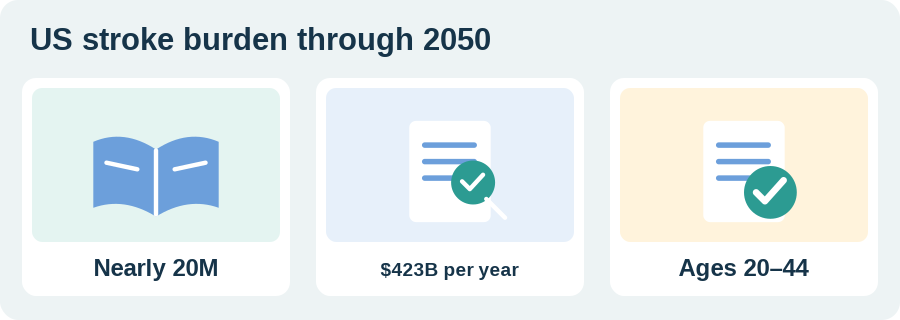
On November 23, the American Heart Association (AHA) projected that nearly 20 million US adults will be living after a stroke in 2050, almost twice as many as today. The annual economic burden, including medical costs and losses when people are unable to work, could rise from about $65 billion to about $423 billion.
Adults ages 20 to 44 are projected to see the largest relative increase
The scientific statement presenting the projections was published in Stroke, a journal of the American Heart Association. The number of people living after a stroke is projected to rise fastest in relative terms among adults ages 20 to 44. Annual stroke-related costs for that group could climb from $7.9 billion to $84.4 billion. Costs are projected to be highest among adults ages 45 to 64, reaching about $142 billion a year.
Projected growth and prevalence across population groups
The number of adults living after a stroke is projected to grow particularly rapidly among Hispanic and Asian adults. Prevalence, the proportion of a population that has had a stroke, is projected to remain highest among Black, American Indian and Alaska Native, and multiracial adults.
Medical expenses and productivity losses from being unable to work
The economic burden includes direct healthcare expenses, productivity lost when illness or disability prevents people from working, and lifetime earnings lost because of premature death. The cost per person living after a stroke could nearly triple.
Prevention and access to care could change the outlook
Neurologist Hugo J. Aparicio, who chaired the statement’s writing group, said the projections do not account for all possible future changes, such as wider use of treatments for obesity and diabetes that could lower stroke risk. He said prevention earlier in life and better access to preventive care could reduce the burden.