French heatwave alerts linked to lower mortality among people 85 and older

France’s National Institute of Health and Medical Research (Inserm) reported on November 24 that heatwave alerts were associated with lower all-cause mortality among people aged 85 and over. The researchers compared days with similar temperatures in 96 departments of metropolitan France. In that age group, mortality was 3.70% lower on alert days.
Analysis covers about 2.46 million deaths across 96 departments
The researchers matched records of 2,462,651 deaths occurring from June through September each year from 2004 to 2022 with daily temperatures and heatwave alerts in 96 departments of metropolitan France. They used a quasi-experimental approach to compare alert days with days without alerts at similar temperatures in the same department and period. They analyzed all-cause mortality by age group and sex. The study was published in Environmental Health Perspectives on November 24.
Departments take measures according to their alerts
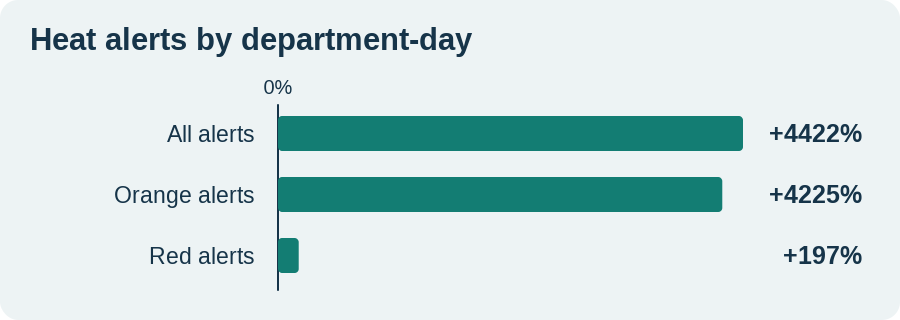
France introduced a nationwide alert system after the 2003 heatwave to protect people vulnerable to heat. The study mainly covered orange alerts, issued when temperatures exceed thresholds for each department, and red alerts, used when the health risk is especially high. In total, the records covered 4,422 department-days with an alert, of which 4,225 were orange and 197 were red. Measures under orange alerts include activating response plans at medical and care facilities and visiting isolated residents.
The association was strongest for the first alert of the year
Mortality was lower on alert days in many groups defined by age and sex, with the largest difference among people aged 85 and over. Their all-cause mortality was 3.70% lower relative to comparable days without an alert. The association with lower mortality was strongest for the first alert of the year and weakened for subsequent alerts. The researchers said the effects of individual measures taken locally remain to be assessed.