Chilean environment minister calls COP31 outcome insufficient and reports progress on electrification and climate finance

On November 24, Chile’s environment ministry released Environment Minister Francisca Toledo’s assessment of COP31, the UN climate conference held in Antalya, Turkey. Toledo called the overall outcome insufficient. She said Chile had joined a global electrification pledge and made progress on technical assistance for climate projects.
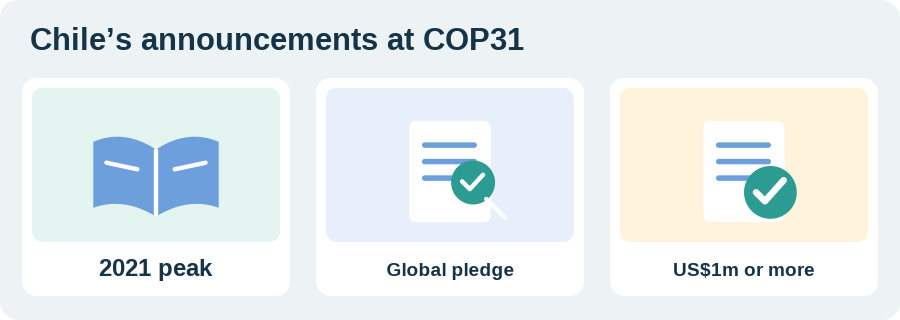
No consensus on a final statement, Chile reports its emissions peak
According to the ministry, the conference ended after roughly two weeks of negotiations without consensus on a final statement. Countries differed over whether to refer directly to phasing out fossil fuels and over financing. Toledo said she told the conference that Chile’s emissions had peaked in 2021, four years earlier than expected, and reported progress towards carbon neutrality by 2050.
Global pledge aims for a 35% electricity share by 2035
Chile joined the global 35×35 electrification initiative promoted by Turkey and Australia. It aims to raise electricity’s share of global final energy consumption to 35% by 2035. Chile said it was important to respect national circumstances and to ensure that power systems are reliable and resilient to disruptions including disasters.
Green Climate Fund formalises at least US$1 million in technical assistance
The Green Climate Fund formally announced at least US$1 million in technical assistance to help Chile turn its climate priorities into projects that can attract funding. The first stage will assess investment gaps and connect projects with investors in four sectors covering transport, the circular economy, forests and infrastructure for climate adaptation. The ministry separately plans to submit regional projects worth US$10 million to the Adaptation Fund, including measures to address flooding in urban wetlands.
Support for local climate action and a bid to host the High Seas Treaty secretariat
Chile was one of four countries selected worldwide under ACT, an international programme that supports local action on climate change. The ministry will provide technical support to help local governments develop projects and put their climate action plans into practice. Chile also promoted its joint bid with Belgium to host the secretariat of the High Seas Treaty (BBNJ Agreement). The proposal would base the secretariat in Valparaíso, Chile, with support from infrastructure and technical expertise in Europe.