South Korea sets a winter-to-spring PM2.5 target of 19 micrograms per cubic meter

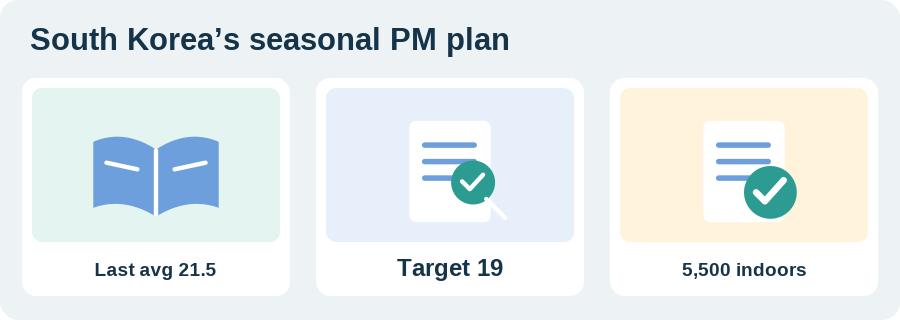
South Korea’s Office for Government Policy Coordination said on November 24 that the Special Committee on Fine Dust, chaired by Prime Minister Han Seong-sook at the Government Complex Seoul, had approved the eighth seasonal management plan. It aims to lower the average concentration of fine particulate matter (PM2.5) from 21.5 micrograms per cubic meter in the previous period to 19 from December 2026 through March 2027.
Additional emissions cuts from December through March
At its 20th meeting, the committee finalized the eighth seasonal management plan for the months from winter to spring when fine dust concentrations tend to rise. Since 2019, South Korea has taken additional steps to curb air pollutant emissions each year from December through March.
Joint monitoring of workplace emissions and air measurements
The government will establish an integrated air quality control center to analyze emissions data from facilities alongside air quality measurements. It will expand monitoring and enforcement using artificial intelligence (AI) and mobile monitoring vehicles from the capital region to the entire country. Emissions reduction measures will cover 450 high-emitting facilities, up from 416, and individually tailored technical assistance for small facilities will expand from 132 to 776 sites.
Indoor inspections expand to 500 more facilities
Special indoor air quality inspections at frequently used places such as underground stations and medical facilities will expand from 5,000 to 5,500 sites. The government will step up patrols in areas at risk of wildfire and enforcement against illegal burning of agricultural waste. The AirKorea app will automatically send forecasts, advisories and warnings for high concentrations.