NASA features a SPHEREx video of the Milky Way’s center in infrared
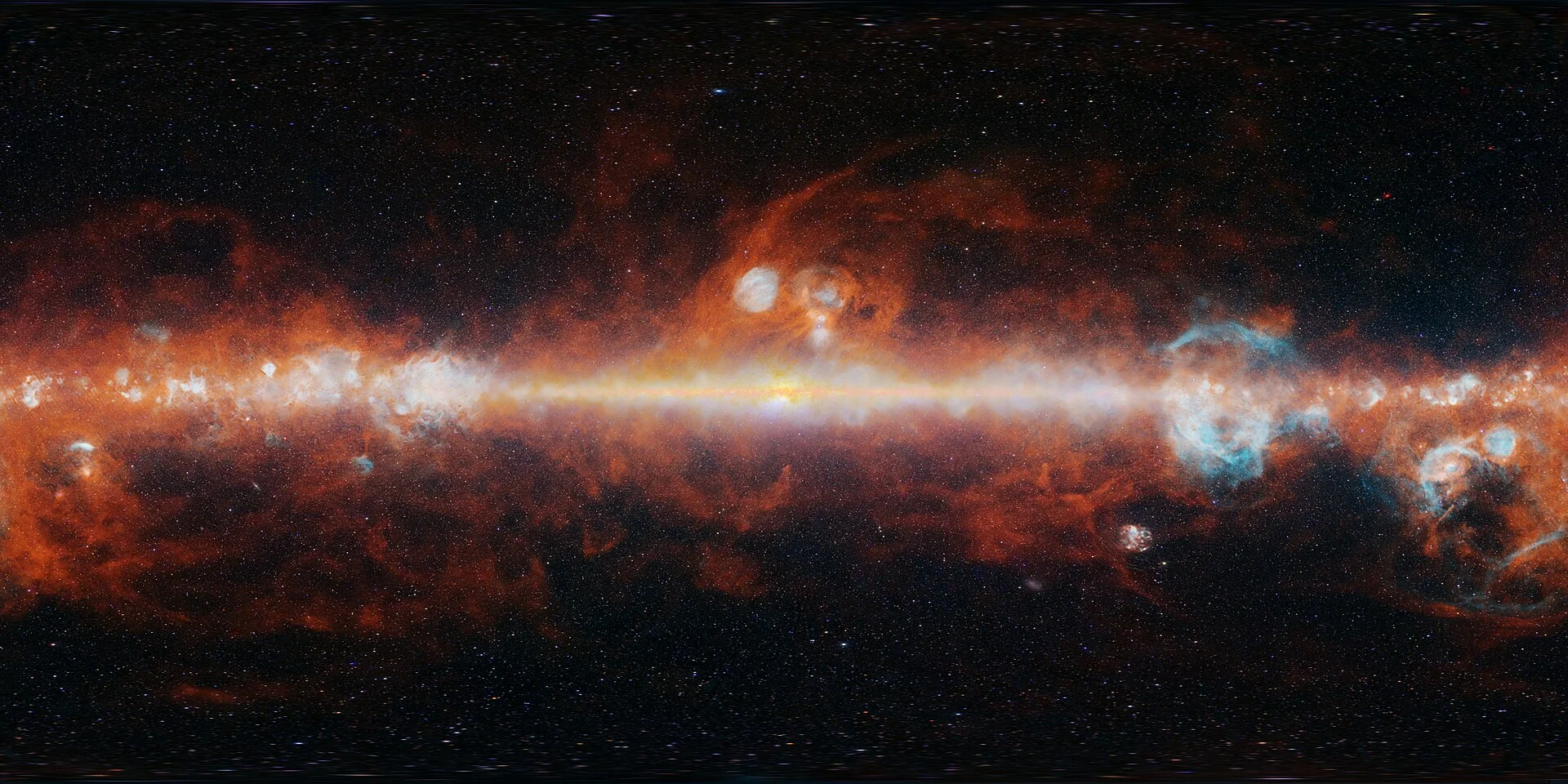
On November 25, NASA’s Astronomy Picture of the Day featured a video showing the center of the Milky Way at different infrared wavelengths observed by the SPHEREx space telescope. The amount of light blocked by cosmic dust varies with wavelength.

Colors show differences by wavelength
The video assigns visible colors to the infrared light SPHEREx detected so viewers can distinguish the different wavelengths. The top-left corner shows the wavelength associated with each color.
Mid-infrared light gets through the dust
At near-infrared wavelengths such as 1.2 micrometers, dust particles absorb or scatter the light. At those wavelengths, clouds of dust appear to obscure most of the Milky Way’s center. At longer, mid-infrared wavelengths, light can pass through the dust and reach SPHEREx.