Hubble observes stars near the Milky Way’s center ahead of Roman’s planet search
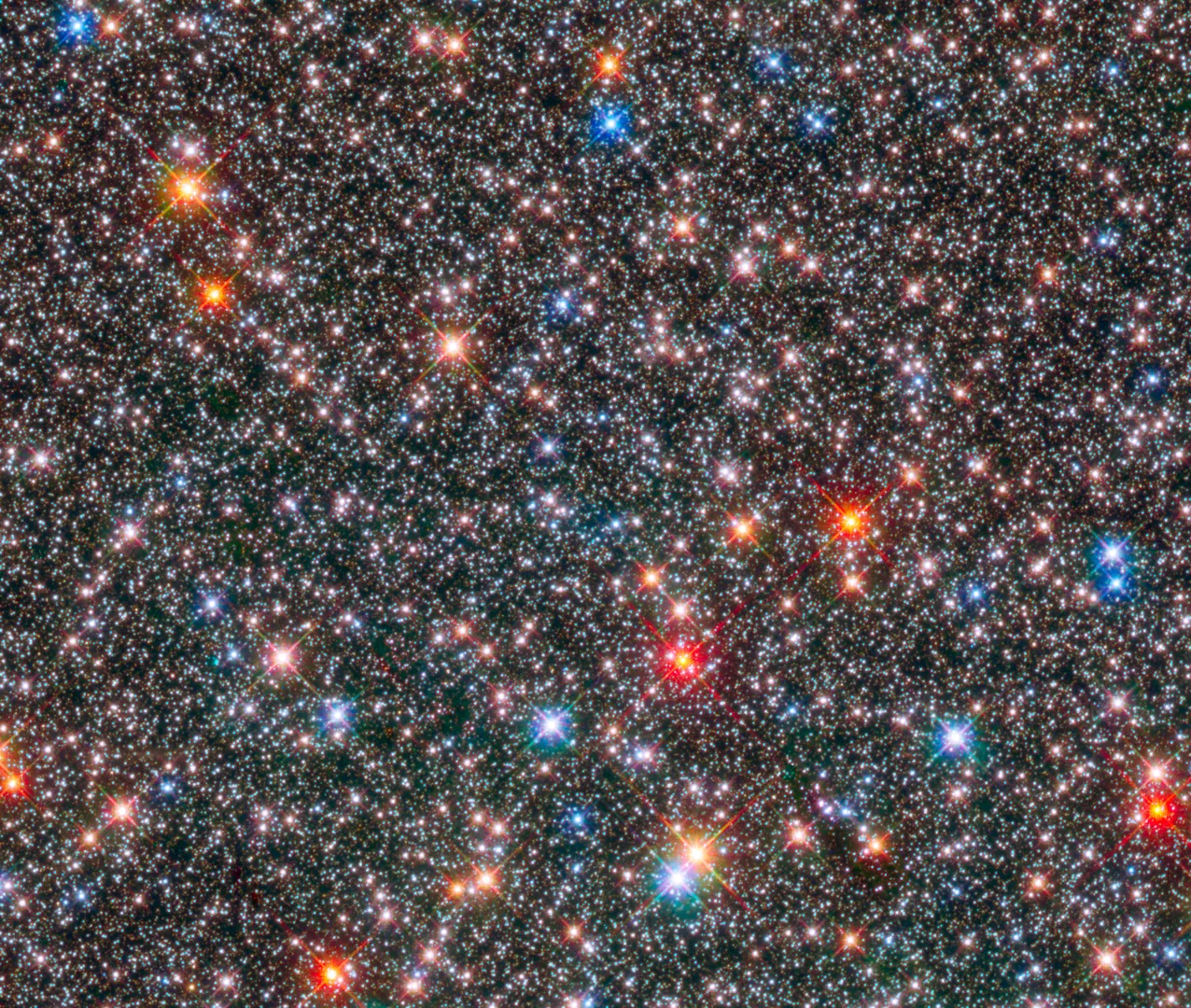
On November 25, NASA released images of stars near the center of the Milky Way taken by the Hubble Space Telescope. The observations will help researchers analyze data when the Nancy Grace Roman Space Telescope looks for exoplanets and other objects in the same region.

Imaging the densely packed galactic bulge
The observations look toward the galactic bulge, a roughly spherical region densely packed with stars that surrounds the center of the galaxy’s disk. NASA says it contains about a quarter of the Milky Way’s stellar mass. Hubble used red visible and near-infrared wavelengths that Roman can also detect and captured images that resolve individual stars.
A baseline for Roman’s search for planets
Roman will look for exoplanets by observing gravitational microlensing, when the gravity of an intervening object temporarily brightens light from a background star. The Hubble data will help researchers characterize stars before these events and compare them with Roman’s future measurements, making the observations easier to interpret.