AWS describes formal verification of EC2 data isolation with Nitro

On November 25, Amazon explained how the AWS Nitro System protects customer data on Amazon EC2 virtual servers. Amazon said it designed Nitro so operators have no mechanism to access customer data and used mathematical proofs to verify the core component that keeps customers’ virtual servers separate.
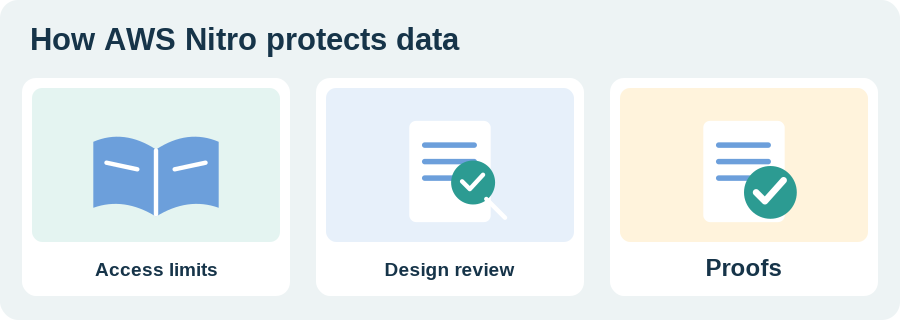
Design limits operator access to customer data
AWS introduced Nitro in 2017. The hypervisor isolates each customer’s virtual servers on a shared physical server. AWS moved networking and storage operations to a dedicated Nitro Card, allowing it to narrow the role of the hypervisor. According to Amazon, the independent security firm NCC Group reviewed the design in 2023 and found no mechanism for cloud operators to access customer data.
Mathematical verification covers the isolation engine
AWS said it developed a dedicated component, the Nitro Isolation Engine, and used formal verification to establish confidentiality, integrity, conformance to the specification, the absence of runtime errors, and memory safety. The proofs cover the engine’s code. AWS describes their scope and assumptions in its technical documentation. The rest of the system continues to undergo testing, design reviews, and independent audits.
Isolation engine always on in Graviton5 instances
AWS deployed the engine in production, where it is always on for EC2 instances using Graviton5. It also released the tools it built for the proofs as open source.