University of São Paulo professor examines how to compare AI with the human brain

André Fabio Kohn, a professor at the University of São Paulo’s School of Engineering in Brazil, outlined two ways to compare artificial intelligence (AI) with the human brain in an essay published by Jornal da USP on November 26. He argued that distinguishing between comparisons of observable responses and studies of internal structures and mechanisms can clarify what test results show.
The black-box approach compares responses
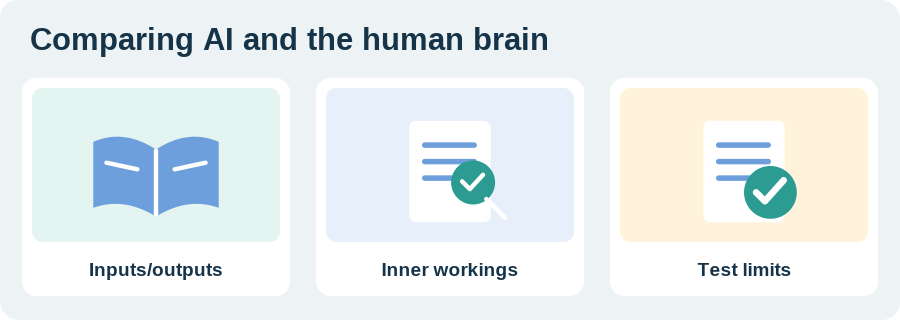
Kohn’s black-box approach compares how inputs and outputs relate, such as questions and answers. The Turing test, for example, examines whether someone reading the responses can tell a human from AI. Kohn cited a University of California San Diego study in which that distinction was difficult under certain conditions. He pointed out that such tests cover only part of the range of human abilities.
The white-box approach examines how systems work internally
The white-box approach examines internal structures and mechanisms, comparing how artificial neural networks are organized with how the brain works. Kohn explained that artificial models simplify how neurons function. Learning in the brain involves changes in a range of neurons and synapses. Kohn sees potential in spiking neural networks, which mimic parts of neuronal signaling, for applications such as robots that need to respond quickly and use little power.